
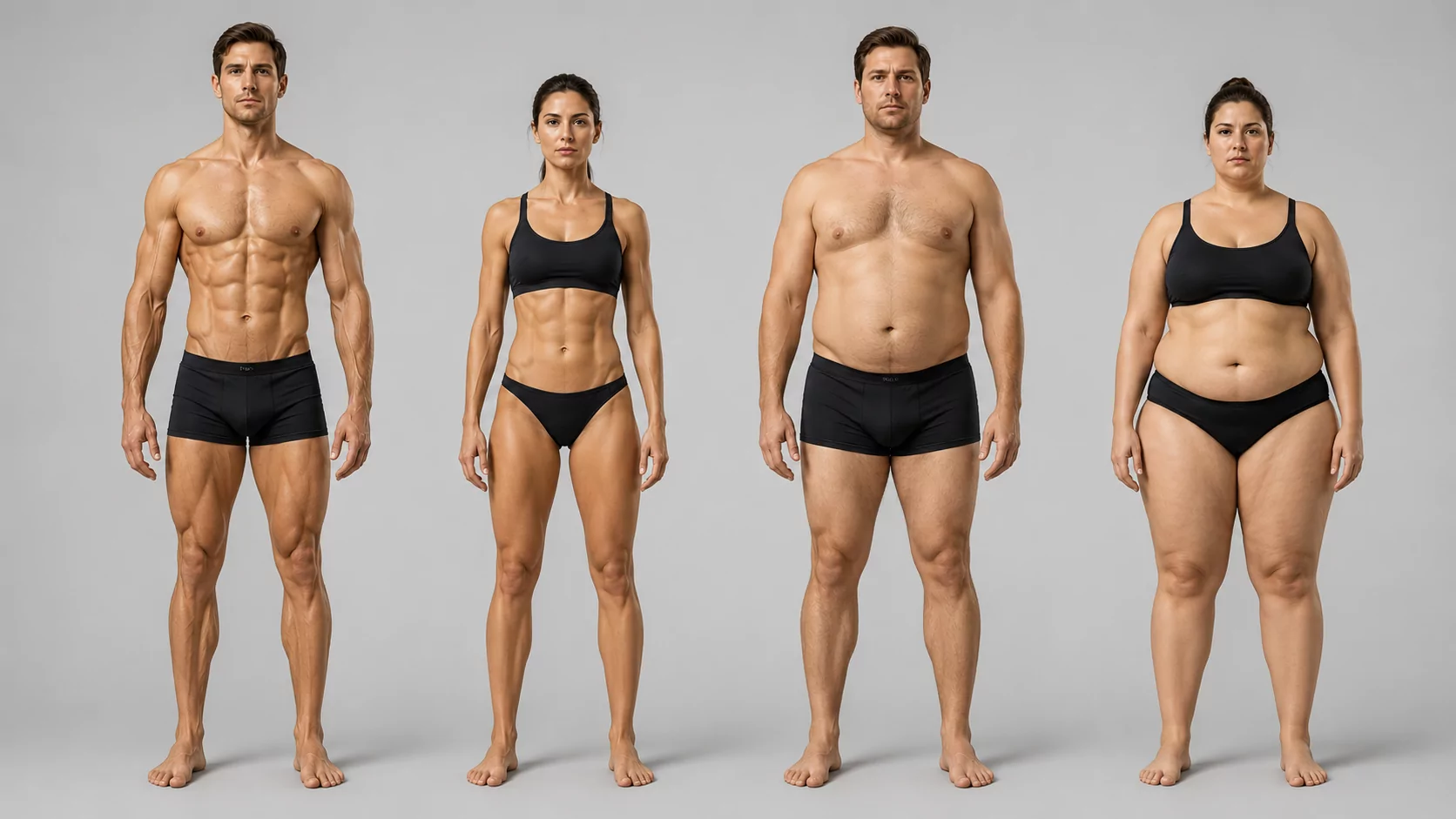
Unlike quick video explainers or Instagram reels, this guide gives you a high-resolution picture library of estimated body fat levels. If you’ve ever wondered how 12% differs from 18% or why two people with the same percentage look dramatically different, you’re in the right place. We’ll cover measurement methods, essential fat minimums, visual comparisons, and the often-overlooked role of lean mass and hydration.
What Exactly Is Body Fat Percentage?
In simple terms, body fat percentage (BF%) is the proportion of your total weight that comes from adipose (fat) tissue. Everything else — muscles, bones, organs, water, connective tissues — accounts for the remainder. It’s a more meaningful health metric than BMI because it distinguishes between fat mass and lean mass.
Top 5 Methods to Measure Body Fat (And Their Flaws)
- Skinfold Calipers – Quick but operator-dependent; error margin ±3-5%.
- Bioelectrical Impedance (BIA) – Scales/handheld devices; hydration alters results drastically.
- DEXA Scan (Dual-Energy X-ray Absorptiometry) – Gold standard among living tests; exposes you to minimal radiation but offers high precision.
- Circumference (Navy tape method) – Free and easy, yet less accurate for individuals with unusual fat distribution.
- Hydrostatic (Underwater) Weighing – Historically accurate but uncomfortable and rare.
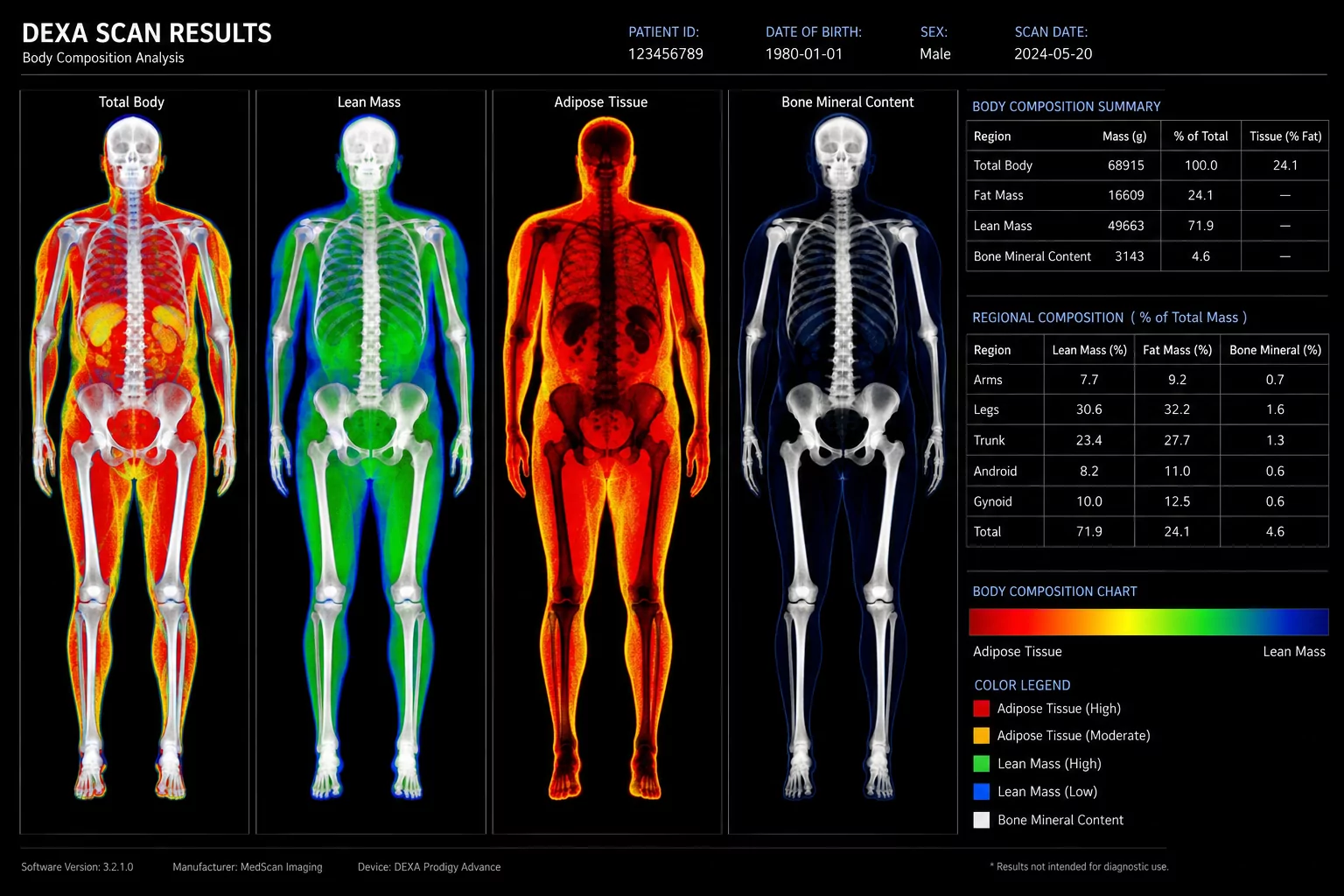
Consensus among sports scientists: DEXA remains the most reliable living measurement, with error rates around 1-2%. However, even DEXA can be tricked by extreme hydration shifts. This is exactly why visual references — though imperfect — remain valuable as a cross-check.
🔍 Do you really need to know your exact BF%? Not necessarily. A mirror, progress photos, and how you feel matter most. But knowing your approximate range can guide fat-loss phases and muscle maintenance.
Minimum Essential Body Fat & Safety
Research suggests essential fat for men is about 3–5%, while for women it’s 10–12% (due to reproductive biology and hormone regulation). For optimal health, most experts advise men stay above 6-8% and women above 14-16%. Sustaining extremely low levels (men under 6%, women under 12%) for prolonged periods can lead to hormonal disruption, low libido, and bone density issues.
📸 Male Body Fat Percentages – Visual Library
Men store stubborn fat primarily in the lower abdomen, lower back (love handles), and chest. As BF% drops, vascularity on shoulders and striations (chest/delts) appear. The reference skeleton (0% fat) helps illustrate progressive soft tissue coverage.
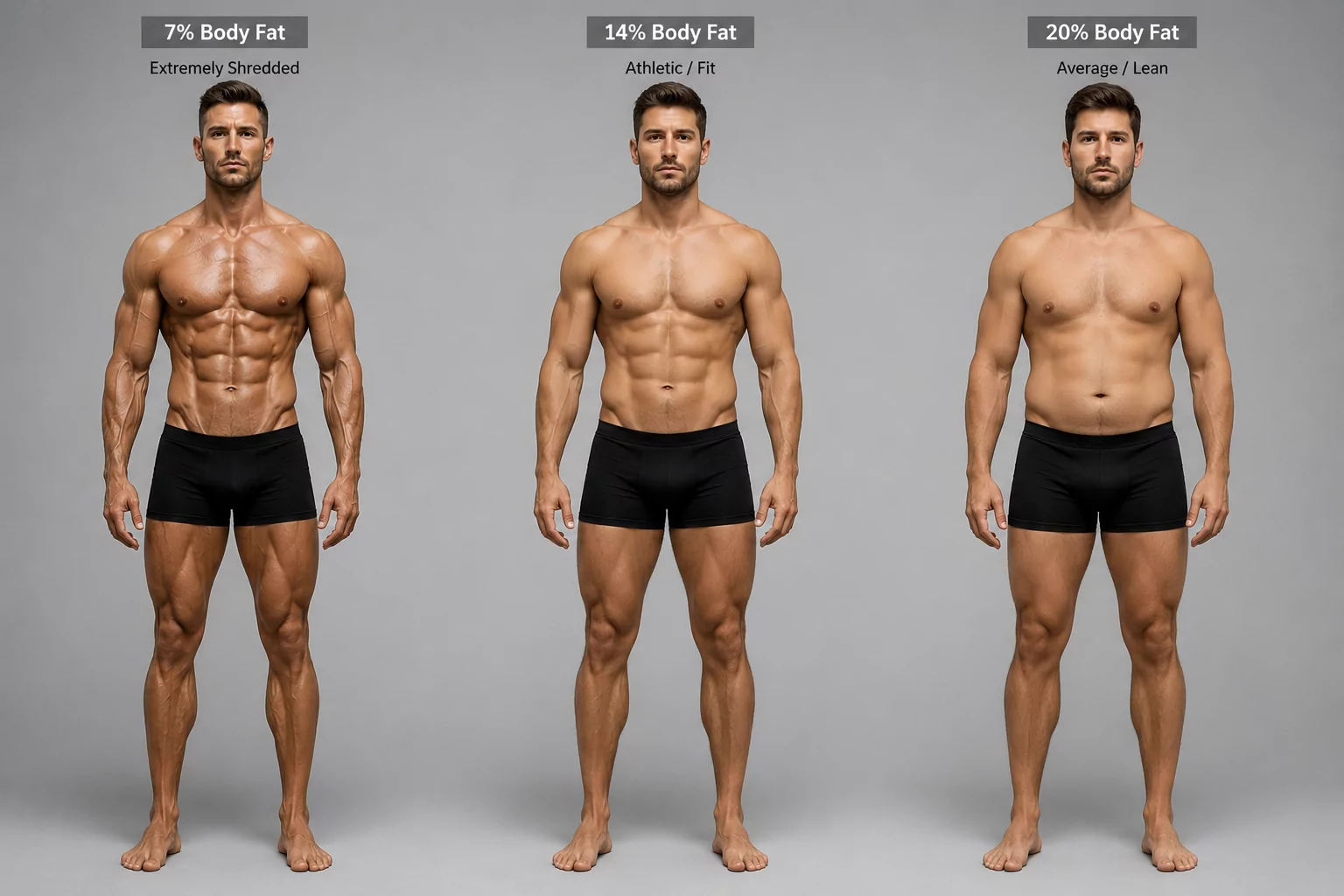
Estimated visual ranges for men:
• 4-6% – Competition bodybuilder; glute/hamstring striations, full muscle separation, extremely lean face.
• 10-12% – “Beach lean”: visible six-pack, minimal love handles, good jawline definition.
• 15-17% – Light muscle definition, soft abs, typical athletic build.
• 20-24% – Mild abdominal coverage, waist appears wider, no visible separation.
• 25%+ – Visual estimation becomes unreliable due to fat distribution patterns.
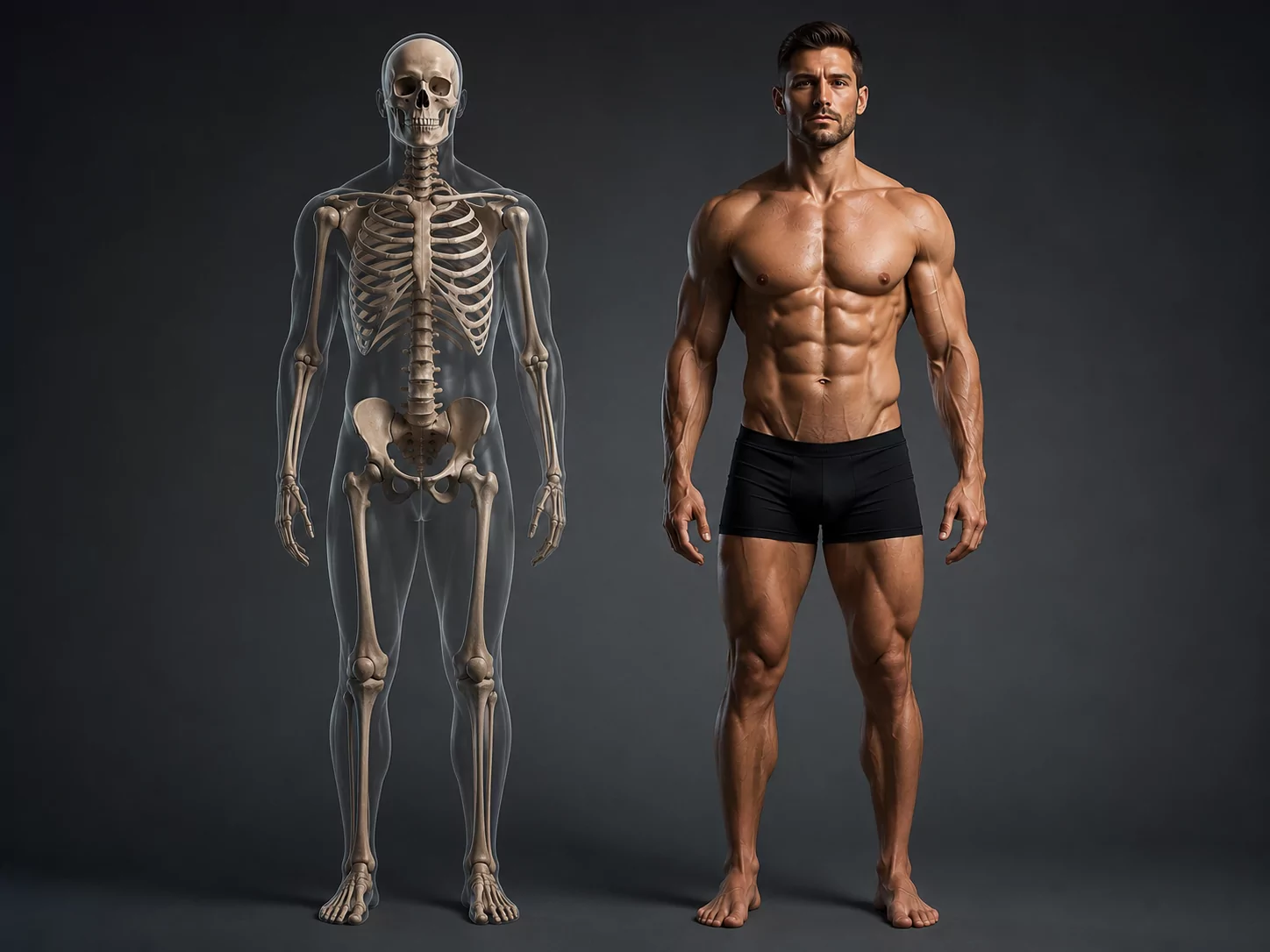
⛔ After roughly 28-30% body fat in males, visual estimation becomes highly subjective. Factors like muscle mass, edema, and fat distribution (android vs gynoid) skew perception.
💃 Female Body Fat Percentages – What to Look For
Women store essential fat in breasts, hips, and thighs (reproductive & hormonal reserves). Key visual markers: visible collarbone/hollowing of cheeks (low BF%), separation between pectoral and shoulder muscles, and quadriceps definition. At extremely low levels (sub 12%), menstrual irregularities can occur.
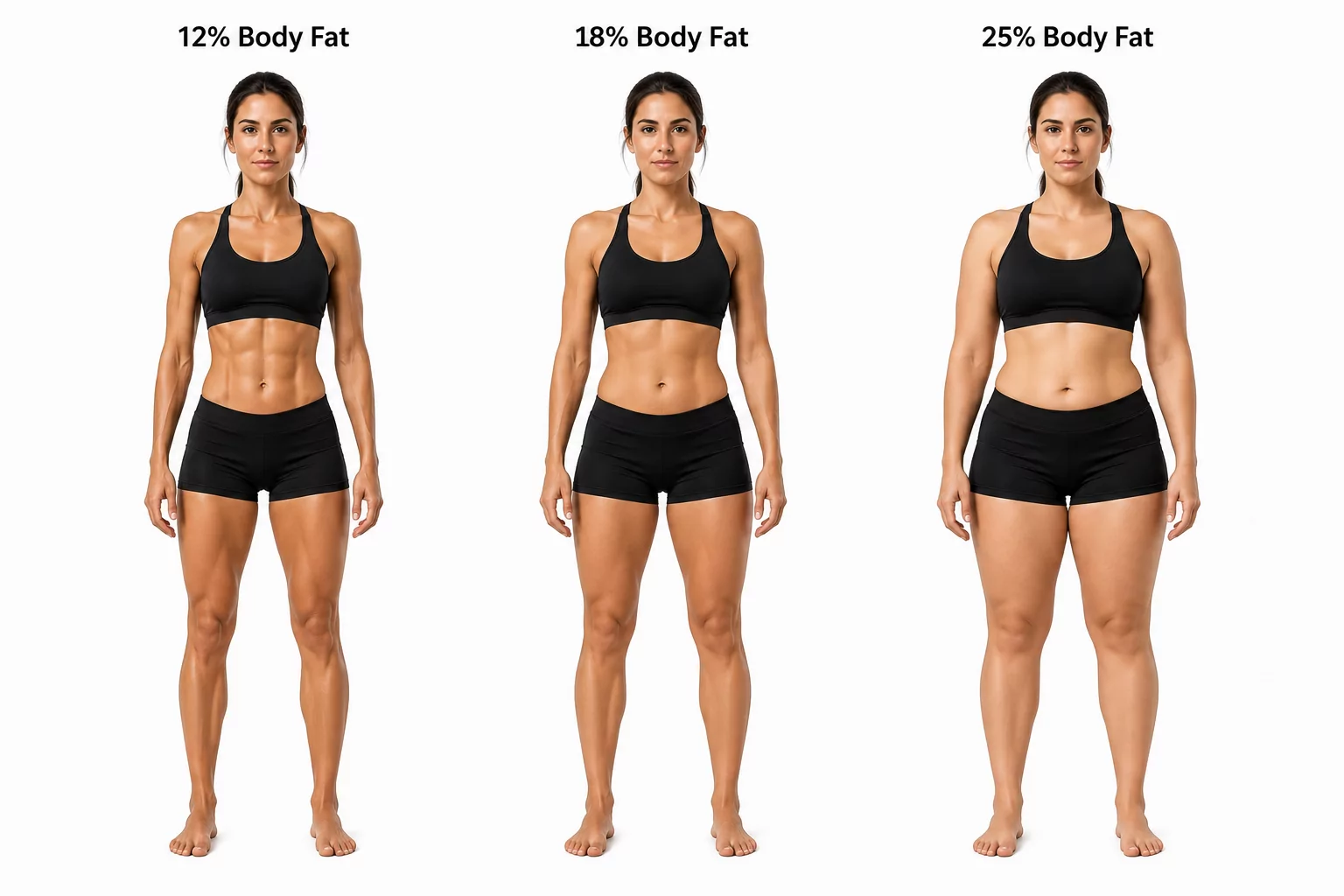
Typical female estimation ranges:
• 10-12% – Essential fat range; very defined musculature; competition shape; often amenorrhea.
• 15-17% – Lean athletic; visible ab lines, clear jaw, minimal hip fat.
• 20-22% – Fit & healthy; subtle muscle curves, “insta-fit” look.
• 25-28% – Average active female; no muscle separation but proportionate.
• 30%+ – Visual differences become highly individual; other metrics are more useful.
✨ Key insight: Women naturally have 8-10% higher essential fat than men. A woman at 18% is comparable in leanness (health-wise) to a man at 10-12%.
Does Everyone Look the Same at the Same BF%? Absolutely Not.
The single biggest myth: same body fat = same appearance. Muscle mass alters the entire equation. A “skinny-fat” person at 15% will look completely different from a muscular person at 15%. Additionally, genetics determine where fat is stored — some hold fat in lower belly, others in thighs or arms.
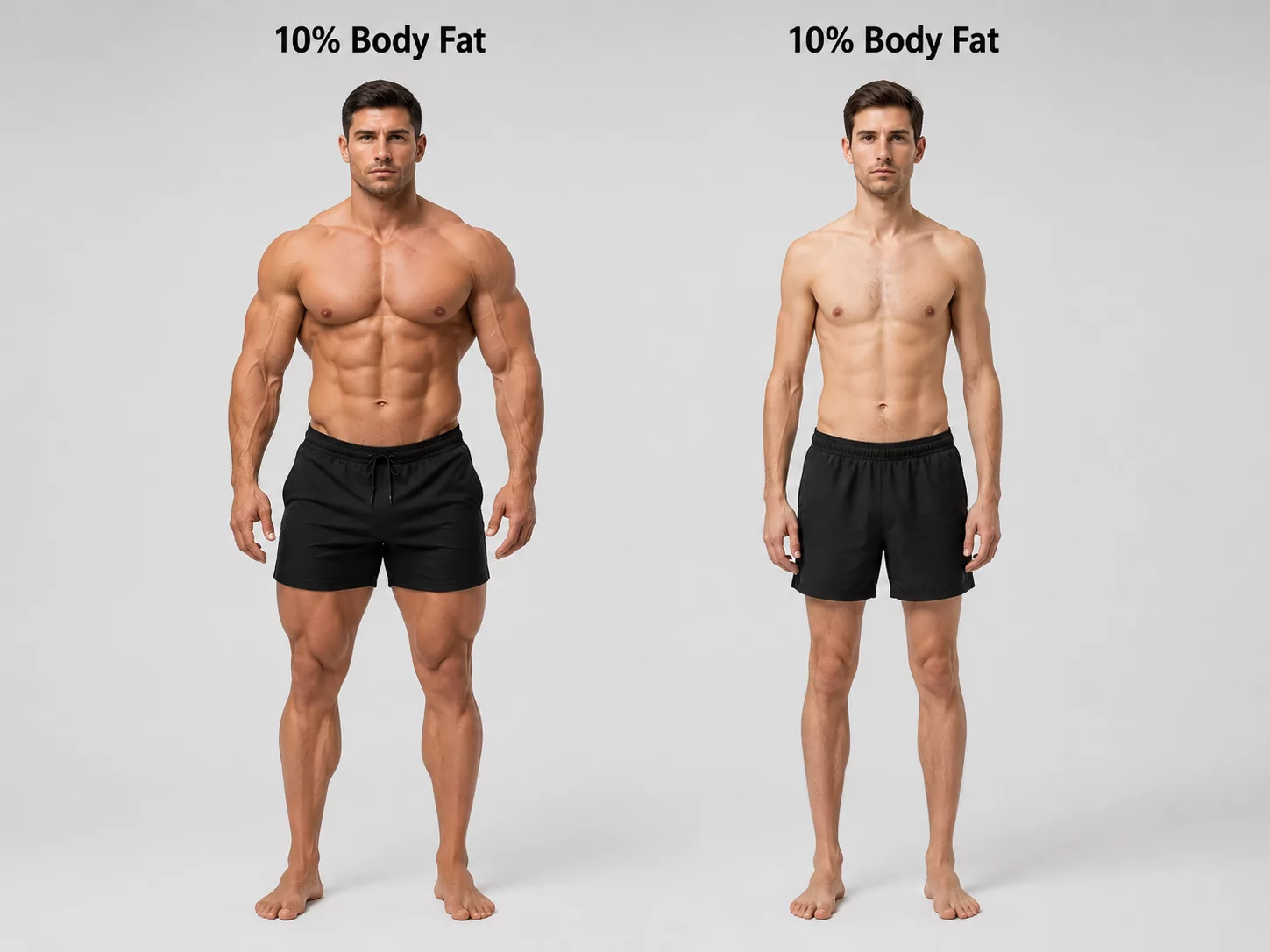
📌 Both men above are approx 10% BF but exhibit radically different physiques. The left individual carries 20+ lbs more lean tissue — proving that BF% alone doesn’t determine aesthetics.
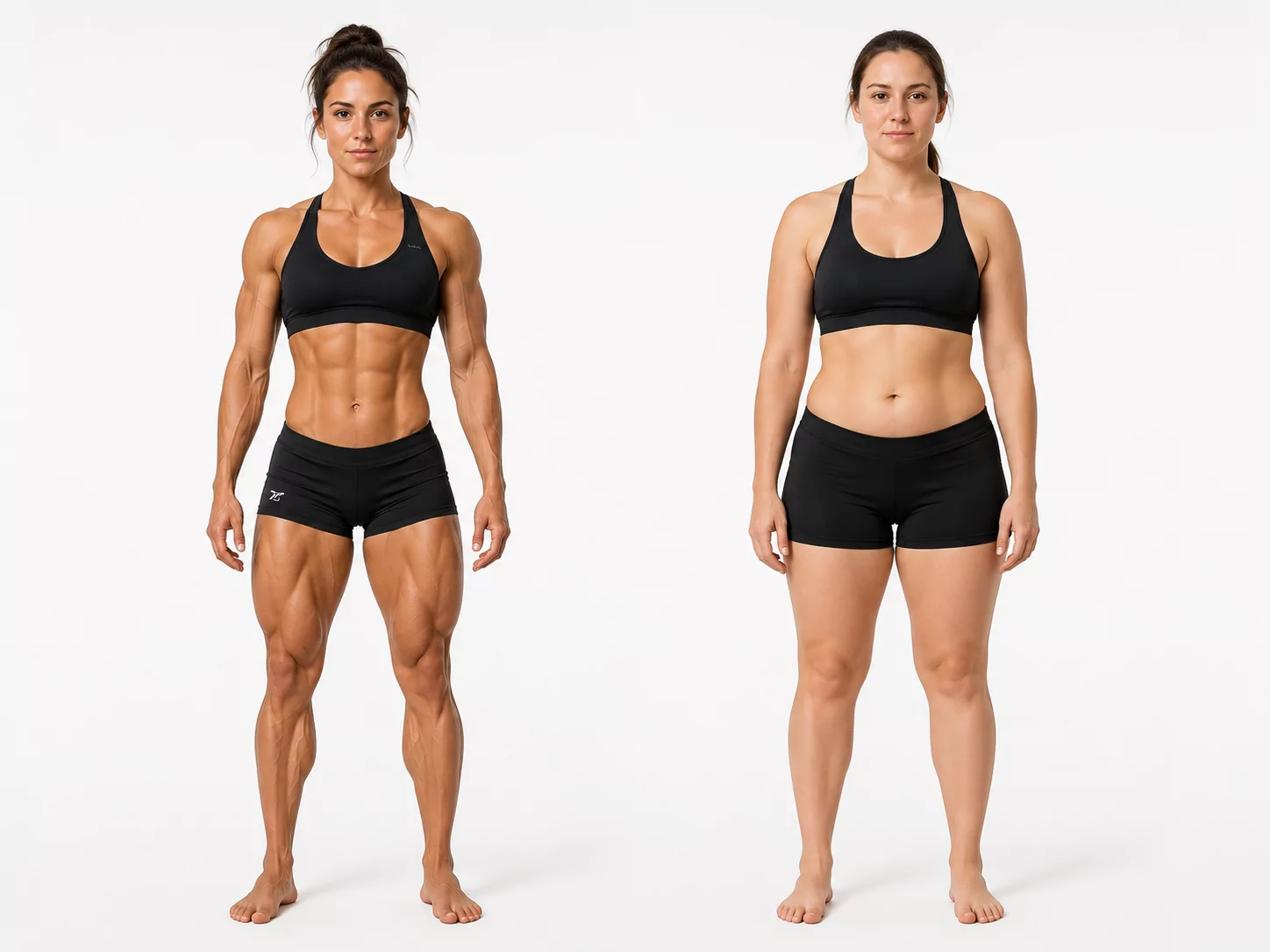
Same applies to women. A physique athlete at 15% who uses strategic water/sodium manipulation will appear harder and more “shredded” than a sedentary woman at the exact same body fat. Below: two women, both roughly 15-16% BF — yet the fitness competitor has enhanced muscle separation and lower subcutaneous water.
💧 Water & Carb Manipulation – The X-Factor
Glycogen depletion and re-loading, as seen in bodybuilding prep, can radically alter appearance without changing body fat by a single percent. Lowering subcutaneous water makes muscles appear more etched, giving the illusion of lower BF%. That’s why two people with identical DEXA scores might look 3-4% apart on a stage. The “Water Manual” technique involves sodium loading/tapering and carbohydrate periodization.
Final Thoughts – Use Pictures as a Compass, Not Gospel
Visual guides give you a ballpark range: useful for motivation and to avoid “phantom leanness” — the tendency to underestimate your actual BF%. But always pair photos with performance metrics and how your clothes fit. The real goal isn’t hitting an arbitrary number, but reaching a body composition that supports energy, strength, and mental well-being.
Ready to estimate your level? Compare honestly to the galleries above, then shift focus to progressive strength training and moderate deficit nutrition. And remember: muscle makes every percentage look better.
* Disclaimer: These visual references are estimates based on athletic and clinical composites. Individual fat distribution and lighting alter perception. Consult a professional before extreme fat loss protocols.
