


If your progress has stalled and your workouts feel repetitive, German Volume Training (GVT) might be exactly what you need. This high-volume system is designed to shock your muscles, push your limits, and force new growth.
Known as the “10×10 method,” GVT is simple in structure but brutal in execution. It’s not for beginners looking for easy gains—it’s for lifters ready to break through plateaus and build real size.
What Is German Volume Training?
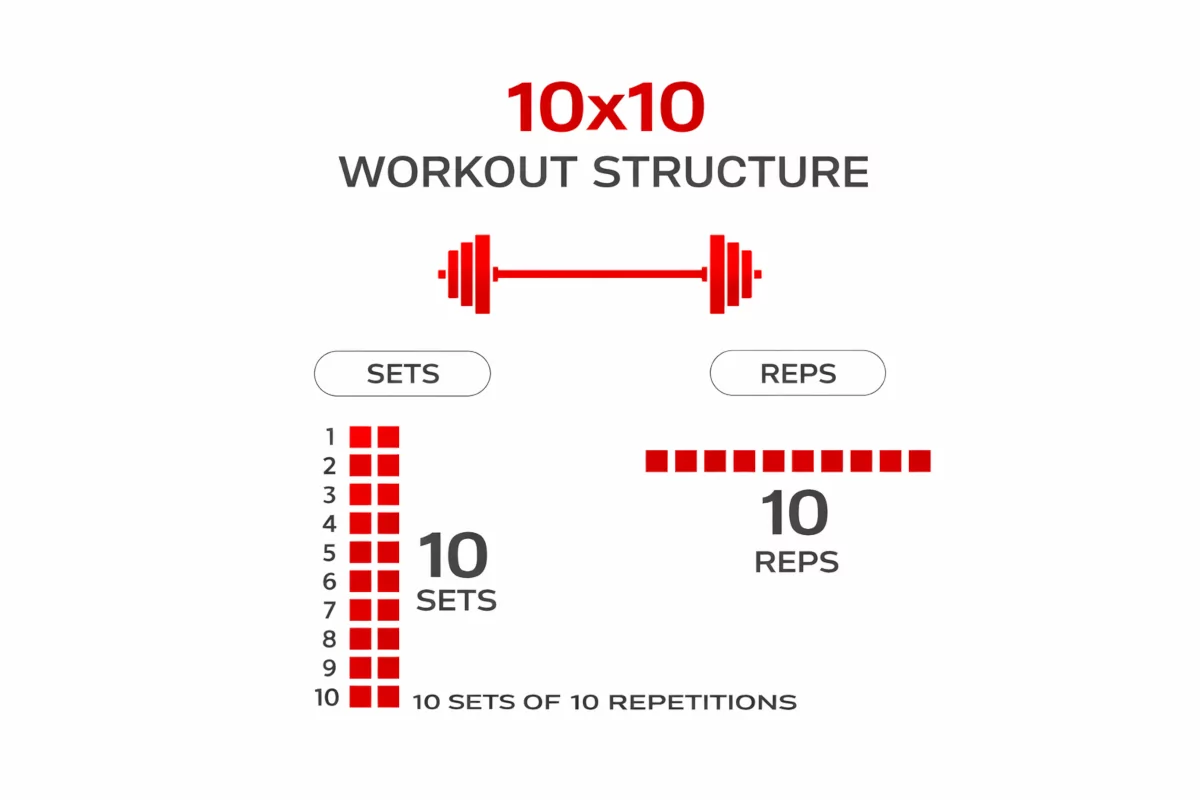
German Volume Training is a high-volume hypertrophy program built around one core idea: performing 10 sets of 10 reps for a single exercise using moderate weight.
This creates massive training volume, increases time under tension, and forces your body to adapt quickly—leading to noticeable muscle growth.
- High volume (100 reps per exercise)
- Moderate intensity (~60% of 1RM)
- Short rest periods (60–90 seconds)
Core Principles of German Volume Training
1. Focus on 1–2 Exercises Per Muscle Group
GVT is not about variety—it’s about volume and efficiency. Stick to compound movements that recruit multiple muscle groups:
- Bench press
- Squats
- Deadlifts
- Rows
Because volume is extremely high, exercise selection matters more than quantity.
2. Perform 10 Sets of 10 Reps
Each main exercise follows the same structure:
- 10 sets × 10 reps
- ~60% of your one-rep max (1RM)
The first few sets will feel easy—but fatigue builds fast. By sets 8–10, maintaining form becomes the real challenge.
Progression tip: Once you complete all 10×10 with clean form, increase the weight slightly in your next session.
3. Keep Rest Periods Strict
Rest between sets should stay within:
- 60 seconds (standard exercises)
- 90 seconds (heavy compound lifts like squats or deadlifts)
Longer rest reduces the metabolic stress that makes GVT effective.
What to Expect from GVT
German Volume Training is deceptively simple—but extremely demanding.
- Early sets feel easy
- Fatigue accumulates rapidly
- Final sets become mentally and physically intense
Expect:
- Severe muscle soreness (DOMS)
- Improved muscular endurance
- Rapid hypertrophy when combined with proper nutrition

The German Volume Training Routine
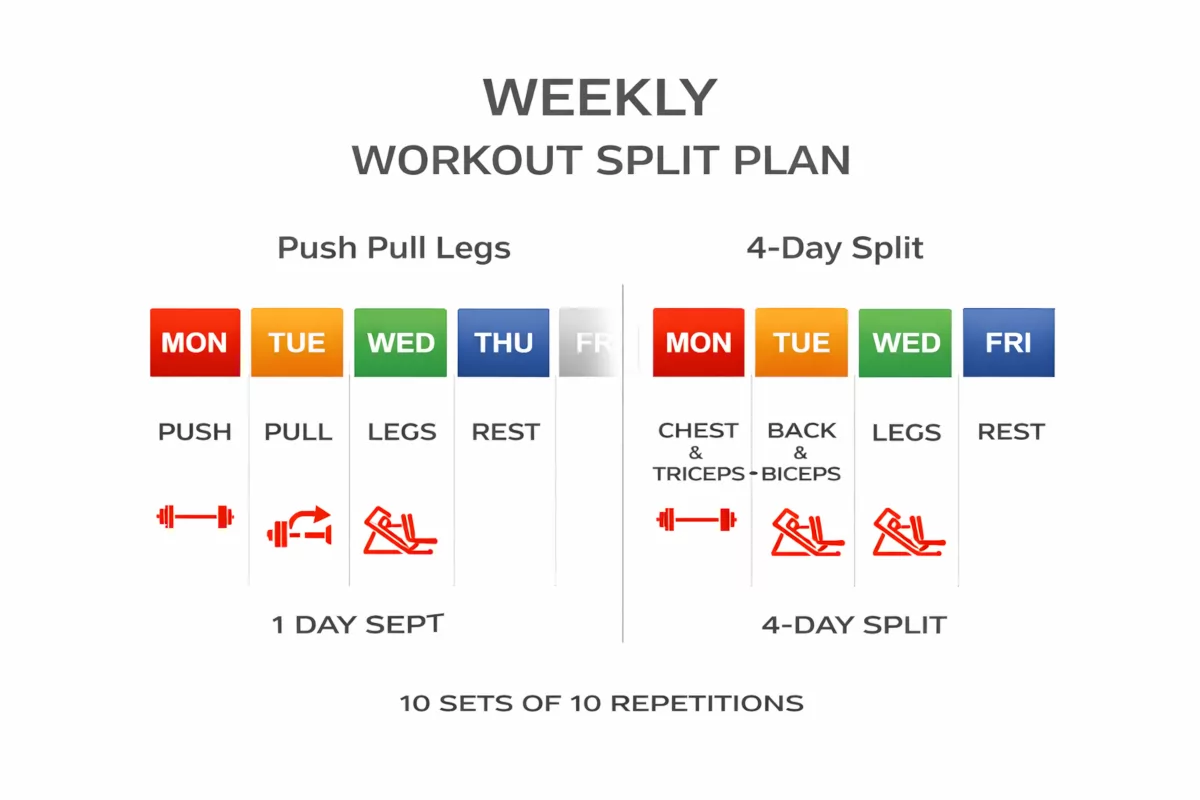
GVT is typically performed 3–4 times per week. The best split depends on your experience and recovery ability.
3-Day Split (Recommended for Most Lifters)
- Day 1: Chest, Shoulders, Triceps
- Day 2: Rest
- Day 3: Back, Biceps, Abs
- Day 4: Rest
- Day 5: Legs
- Day 6–7: Rest
This split allows more recovery time and is ideal for first-time GVT users.
4-Day Split (Advanced Lifters)
- Day 1: Chest & Back
- Day 2: Legs & Abs
- Day 3: Rest
- Day 4: Shoulders & Arms
- Day 5: Posterior Chain & Abs
- Day 6–7: Rest
This version often includes supersets and places more stress on recovery and the central nervous system.
Exercise Selection for GVT
Keep it simple. GVT works best with proven, basic lifts:
- Chest: Bench press, dips
- Back: Barbell rows, pull-ups
- Legs: Squats, leg press
- Shoulders: Overhead press
- Arms: Barbell curls, skull crushers
Avoid overcomplicating your program—consistency and volume drive results.

How Long Should You Run GVT?
Due to its intensity, GVT should be used in cycles:
- Beginners: 4–6 weeks
- Advanced lifters: 6–8 weeks with deload
After completing a cycle, switch to a lower-volume hypertrophy program to recover and consolidate gains.
Tips to Maximize Results
- Focus on perfect form—especially in later sets
- Don’t increase weight too early
- Eat in a caloric surplus to support growth
- Prioritize sleep and recovery
- Stay mentally disciplined—GVT is as much mental as physical
Final Thoughts
German Volume Training is one of the most effective methods for building muscle quickly—if you can handle it.
It’s intense, repetitive, and physically demanding—but that’s exactly why it works. If you’re serious about breaking plateaus and adding size, GVT can deliver impressive results in a short time.
Train hard, recover properly, and commit to the full program—and your body will respond.
